
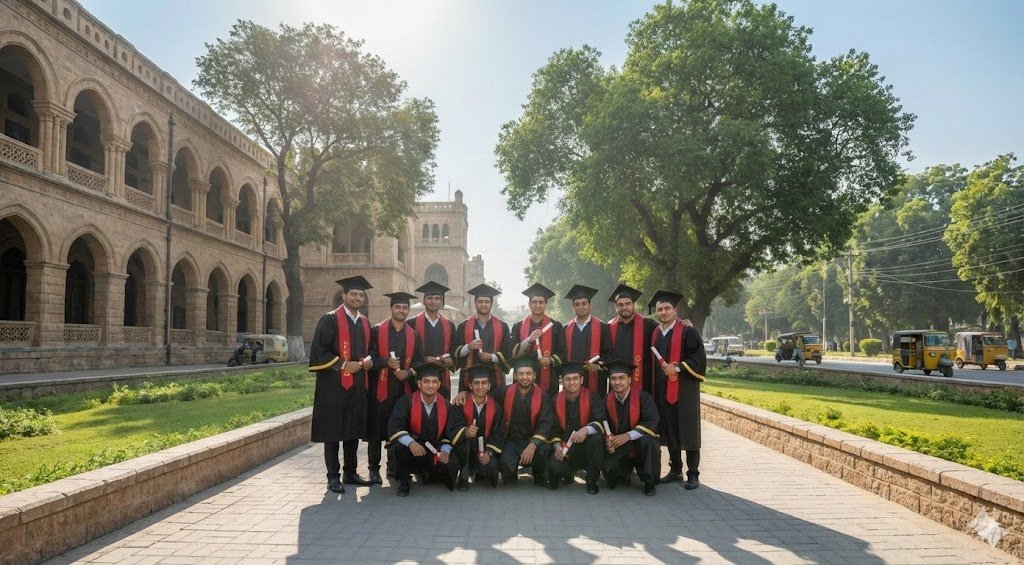
The academia in Pakistan is not aware of the gap between the graduates it has been producing and the market requirements. What is more alarming that the varsities even do not feel the need to measure this gap. As a result, a large number of graduates are being produced on an annual basis who do not possess skills required by the job market.
Serial entrepreneur and Famco Associates Board Chairman Muhammad Ghazali said this on an OTS EdTech podcast as he shed light on why Pakistan, despite being the sixth most populated country in the world, continues to remain underrepresented in the global IT market.
He said he frequently encounters fresh graduates in interviews who are unable to justify their choice of degree. Many business graduates of the country do not know what the Shark Tank is, he remarked, adding that he believed that one need not study business management if they had watched 200 episodes of the Shark Tank.
The entrepreneur said even many teachers of business schools in the country told him they had not heard of the Shark Tank. He said he did not blame the teachers for such ignorance because many university teachers were not being properly remunerated and one should not expect them to excel in their fields when they were struggling to get their bills paid.
He called for the regulator of higher education in the country to play its due role and ensure that the university teachers had proper salaries. He also criticised underutilisation of endowment funds of universities stating that such funds kept on increasing but the varsities never used them to fund start-ups.
The discussion also touched upon the IT industry in the Middle East. Ghazali said he had been associated with the region since 1990s and had worked in Saudi Arabia, Oman, Bahrain and Kuwait. He explained that the job market had altogether changed in Saudi Arabia in recent years and now the only way to get employed there was having the required skill of the job. Belonging to a particular religion or sect now made no difference in getting a job in the Middle East, he said.
The serial entrepreneur lamented the lack of government’s interventions for boosting the software exports of the country. He said the global market of software export from the developing countries to the developed world was worth around $100 billion and the share of Pakistan in the market was not sufficient given the high population of the country.
He said software export had not been given the status of industry in the country and though the Pakistan Software Export Board had been established, the government had yet to facilitate the industry and provide incentives for its growth.
When asked how Pakistani firms got orders in the software export market where the entire world was competing, Ghazali said depreciation of Pakistani rupee played a role in that. He added that the software export market operated in various tiers and as the exporters of more prosperous countries would not accept orders offering less amount of dollars, Pakistani software engineers were able to get those orders.
At the end of the podcast, the serial entrepreneur advised the young graduates to focus on detail. He said that although artificial intelligence was at their disposal, the youths often showed carelessness in drafting emails, writing documents and dressing up properly.